

Resources
-

NIHR INCLUDE . The Impaired Capacity to Consent Framework
The is a tool for researchers to ensure that their trial is designed to be inclusive of people with impaired capacity to consent, as well as improving the quality of the trial design and funding application.
You can also access e-learning about this on https://www.capacityconsentresearch.com/uploads/1/3/5/9/135960405/instructions_for_registering_and_completing_consult_e-learning_v1.0.pdf
-

A Framework to develop your research skills
Vitae’s sector-leading Researcher Development Framework (RDF) is a widely recognised and utilised approach to researcher development.
The framework articulates the knowledge, skills, and behaviours of effective researchers, and is used for planning, promoting and supporting the personal, professional and career development of researchers.
-

Building Palliative and End of Life Care Research Capacity
Click on the link below to add your thoughts to Padlet about key questions in building our research capacity. You can see what other members have added too.
-
NIHR Research career development funding programmes
Slide set from Tanya Probart, programme manager at NIHR. This will help you understand more about the NIHR Academy and the funding programmes for personal fellowships.
https://www.nihr.ac.uk/career-development/research-career-funding-programmes
-
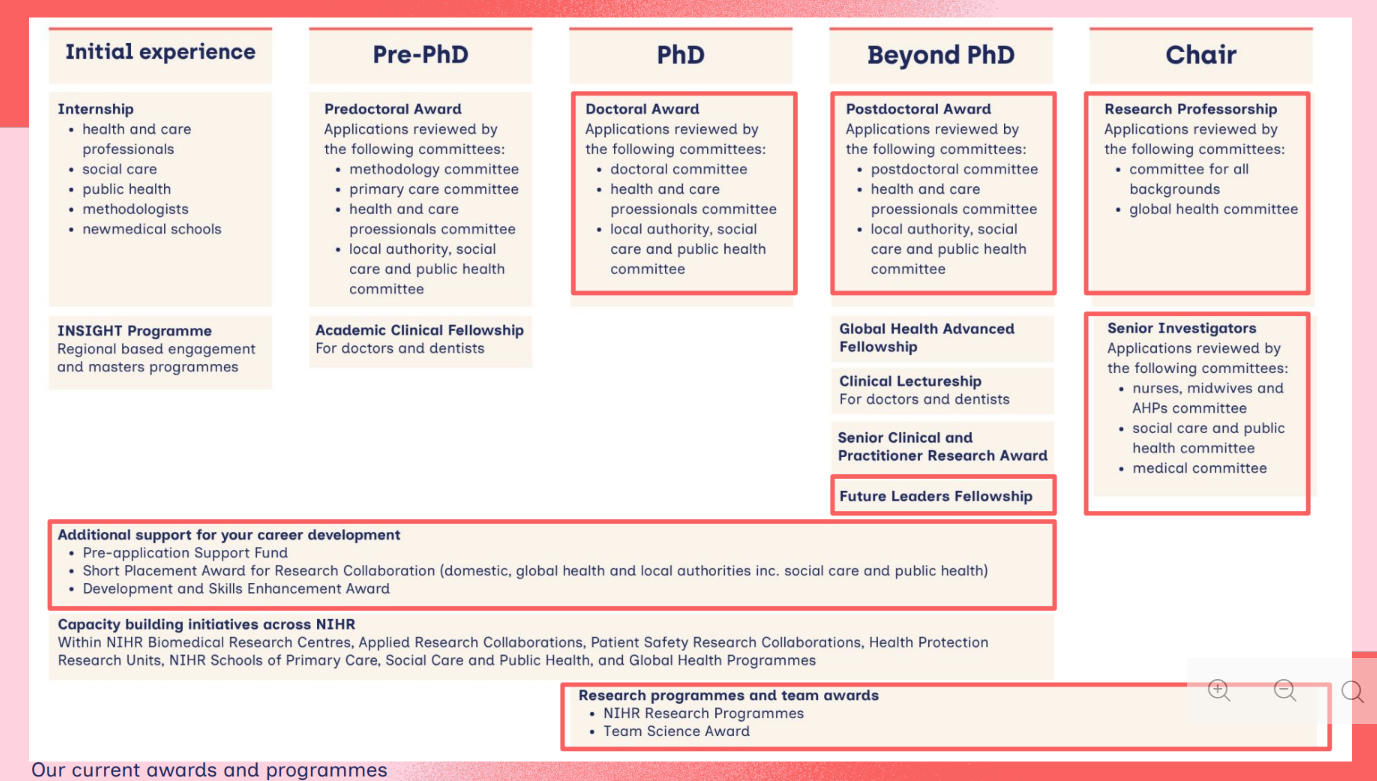
The NIHR and Funding Pathways for personal awards
The career development framework designed to support health and care researchers at Predoctoral, Doctoral, Postdoctoral, and Professorships/Senior Investigators levels.
-
NIHR ARC National forum for palliative and End of Life care Webinar series
Webinar 1. Recruitment in palliative and end of life care research
Webinar 2: Breathlessness in palliative and end of life care research
youtube.com/watch?v=fyl2UBoOX34&feature=youtu.be
Webinar 3: What can we learn from international research on assisted dying?
https://www.youtube.com/watch?v=pdBh2Dz9jbo
Webinar 5: The health and caregiving experiences of parents of children with a life-limiting condition.
-
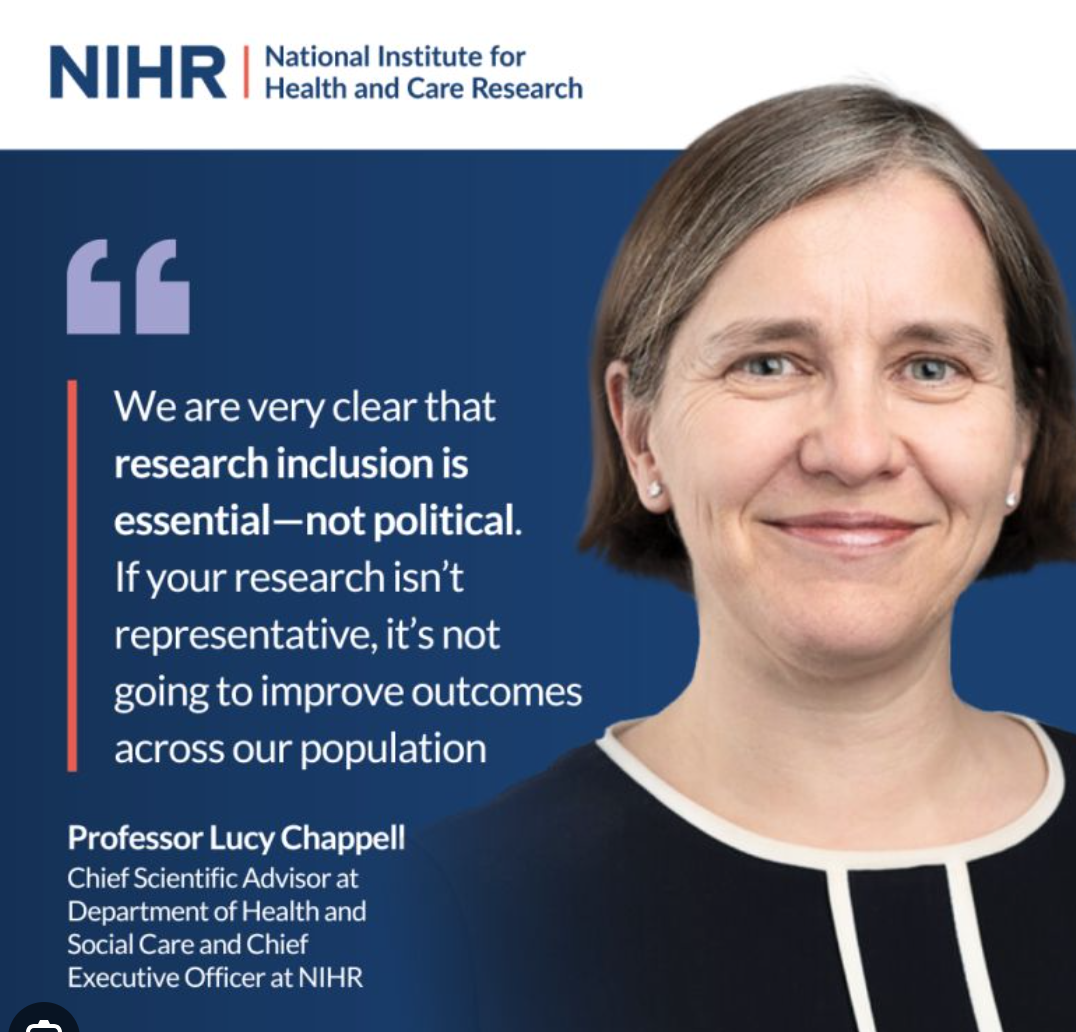
Inclusive Research
A talk by Dr Sabrina Bajwah, Kings College London, that will help you understand more about the inclusion of underserved groups in your research.
A useful Guide to Inclusive research can be found here
-
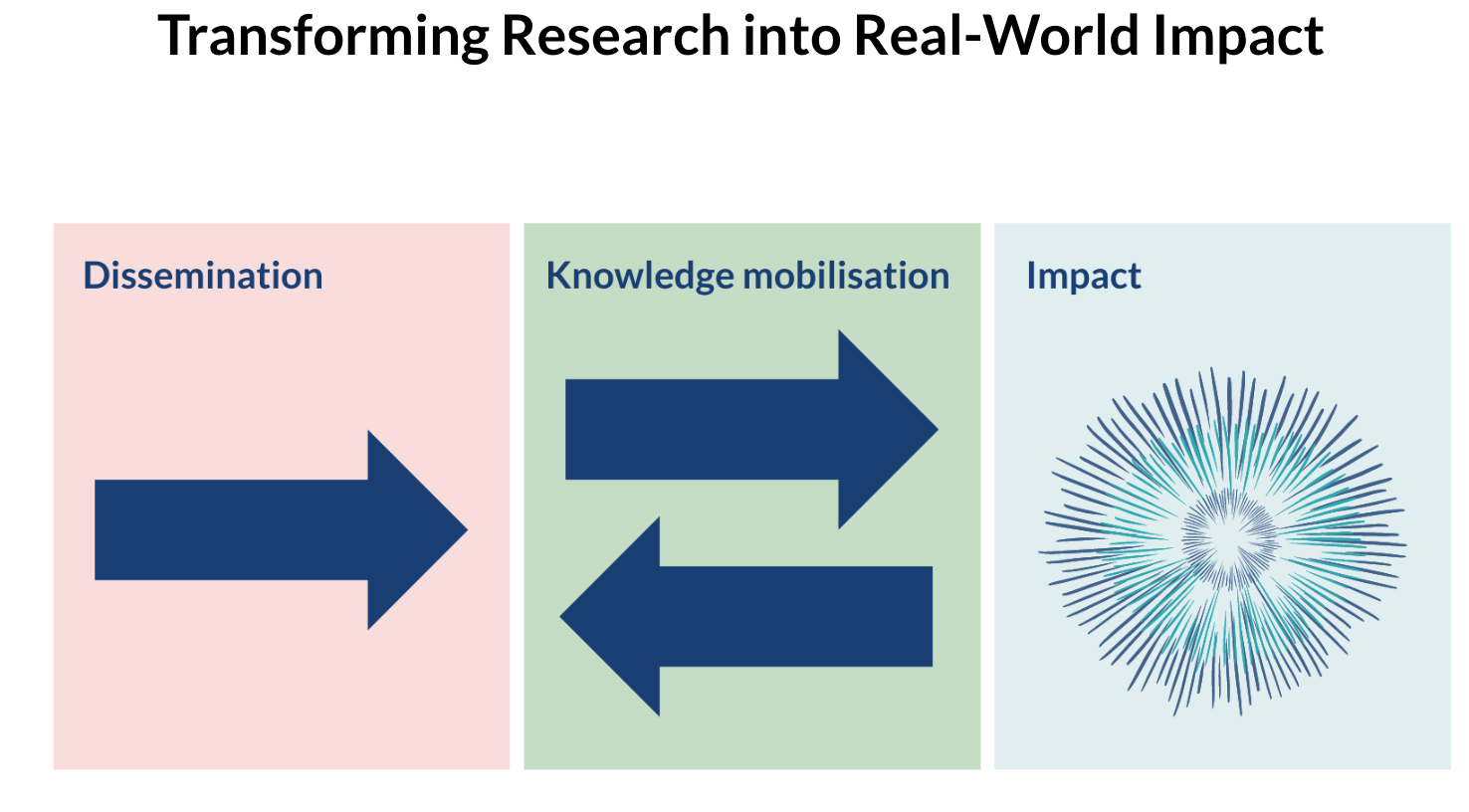
Research Impact
A talk by Prof Katherine Sleeman, Kings College London, that will help you think about how your research will make a difference and how you might evlauate this.
-

Understandig NIHR funding opportunties and the NIHR Research Support Service
A talk by Rosemarie Greenwood, Research Support Service (RSS) , Leicester.
The RSS is an important resource for helping you develop all aspects of your research from research question to fianl grant application.
Also see https://www.nihr.ac.uk/support-and-services/research-support-service
-

NIHR Mentoring Programme
A mentoring programme for final year PhD and postdoctoral NIHR Academy Members. Taking part will support your academic and career development.
The NIHR Mentoring Programme supports all health and care professions. You can benefit from 1-2-1 support for your career development, including time for personal growth and reflection. Both mentees and mentors gain new perspectives, fresh ideas and expand their professional networks.
-

NIHR Research Delivery Network (RDN) Palliative Care Specialty Leads in your Region
A list of all the NIHR Regional Palliative Care Specialty Leads (RRDN leads) across England
-
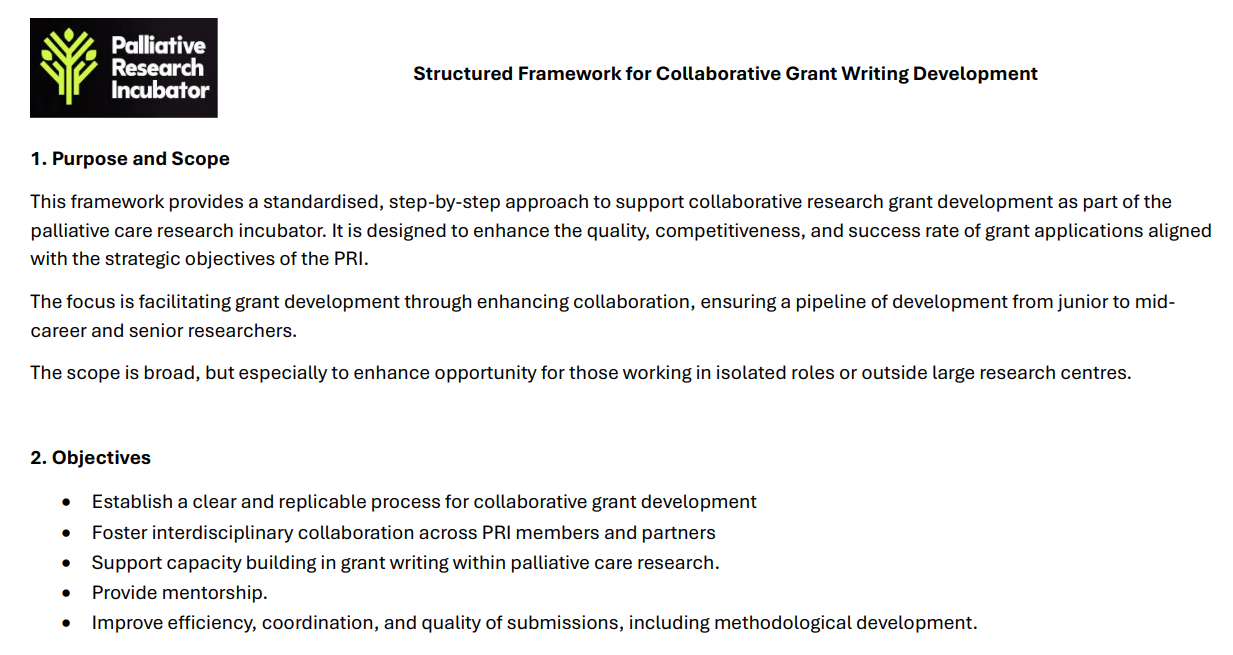
The PRI Structured Framework for Collaborative Grant Writing Development
This framework provides a standardised, step-by-step approach to support collaborative research grant development as part of the palliative care research incubator. It is designed to enhance the quality, competitiveness, and success rate of grant applications aligned with the strategic objectives of the PRI.
The focus is facilitating grant development through enhancing collaboration, ensuring a pipeline of development from junior to mid-career and senior researchers.
The scope is broad, but especially to enhance opportunity for those working in isolated roles or outside large research centres.
-

Vitae: Empowering researchers to make an impact on their careers
Vitae aims to strengthen institutional provision for professional development through resources, events, research, learning and development support, policy and advocacy.